

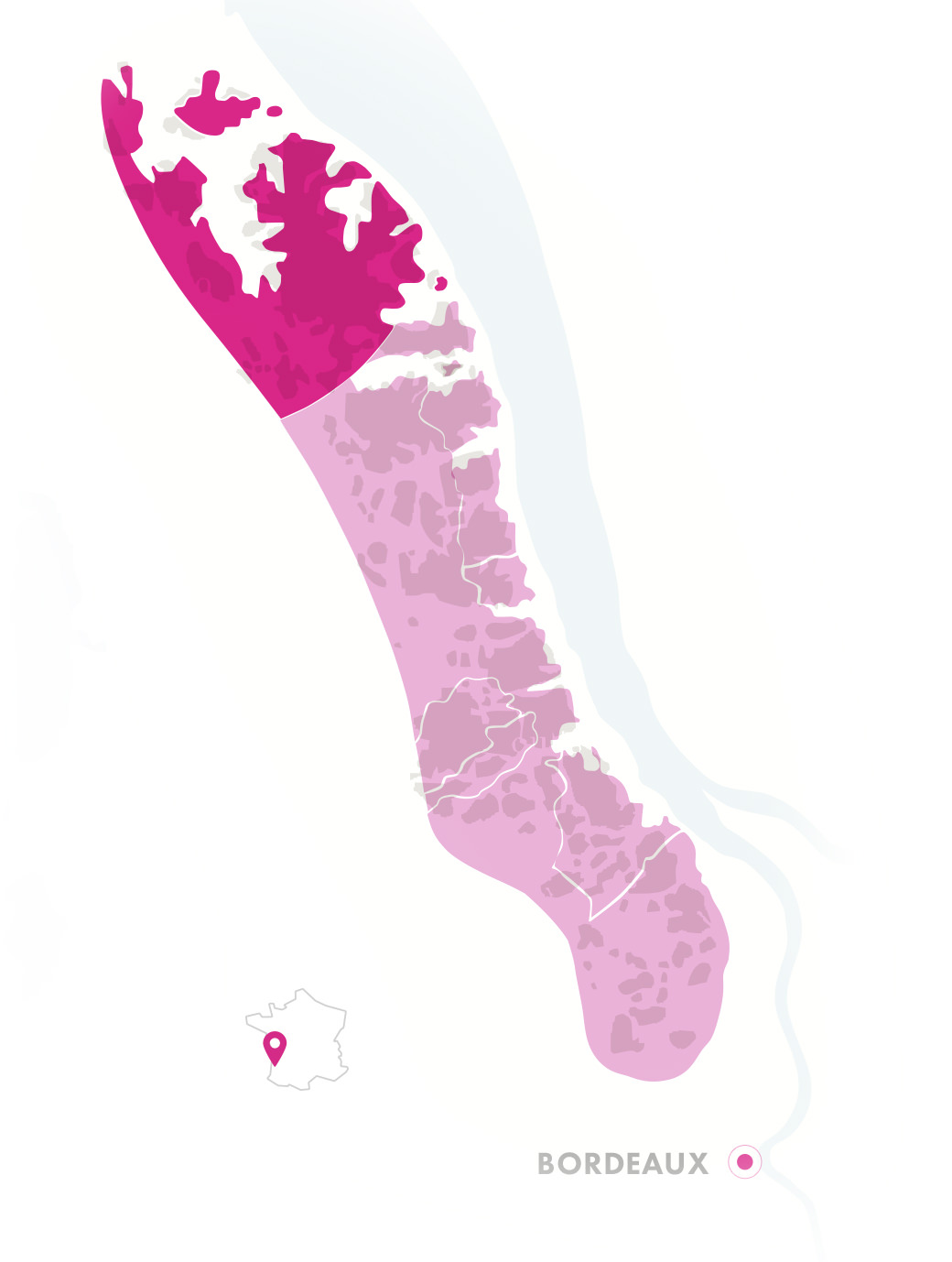
A vast territory
Based on the original texts, the eight appellations of the Médoc Peninsula (from Blanquefort Jalle (stream) to the north of the city of Bordeaux, almost to the Pointe de Grave) may apply for the (AOC) Médoc. It is therefore possible to produce AOC Médoc wines in Pauillac, Moulis or Saint-Julien, for example.
To the north of the peninsula there is a specific area, which produces exclusively AOC Médoc. The great majority of Médoc wines come from this region. This north-medocan region is characterised by the recent increase in vine planting, alongside the older vineyard plots. The presence of small estates has created a powerful co-operative movement, sharing vinification technology and allowing vineyards to survive the crisis of the 1930s. This group is known as L’Union des Viticulteurs du Médoc (“UniMédoc”), which ensures the ageing, bottling and marketing of wines produced by the co-operators.
The terroir
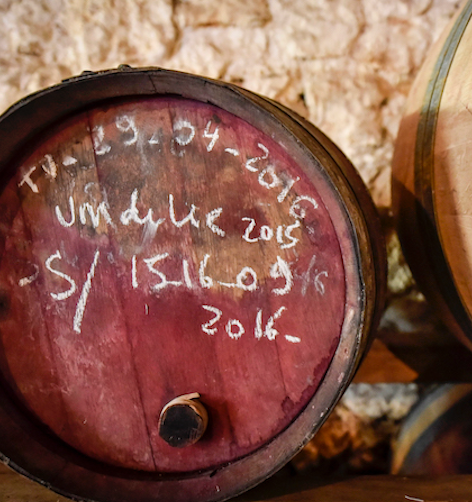
The land of the Médoc appellation has the three kinds of Médoc terroirs: Garonne gravel, Pyrenean gravel and clay and limestone soils. Given the large area of the appellation, the soils and subsoils of these terroir are extremely varied.
Tasting
The wines of the Médoc owe their infinite palette of aromas to the variety of their terroir. Wines are characterised by their distinction, roundness and balance. They can be full bodied with a fine ruby red colour in which case they will benefit from ageing, allowing their many nuances to develop. Others are elegant, subtle, and fruit driven, ready for drinking young, without masking their exemplary finesse.
Crus