

Its history
Whereas the first activity recorded in Saint-Estèphe goes back as far as the Middle Bronze Age, the first vines date from the Roman Occupation. But it was the Bordeaux merchants who, by ageing and selling Saint-Estèphe wines themselves, were largely responsible for this appellation’s fame. The 14th century, noted for its prosperity, saw the creation of the great estates we know today. The movement continues today with the merging of small estates.
The terroir

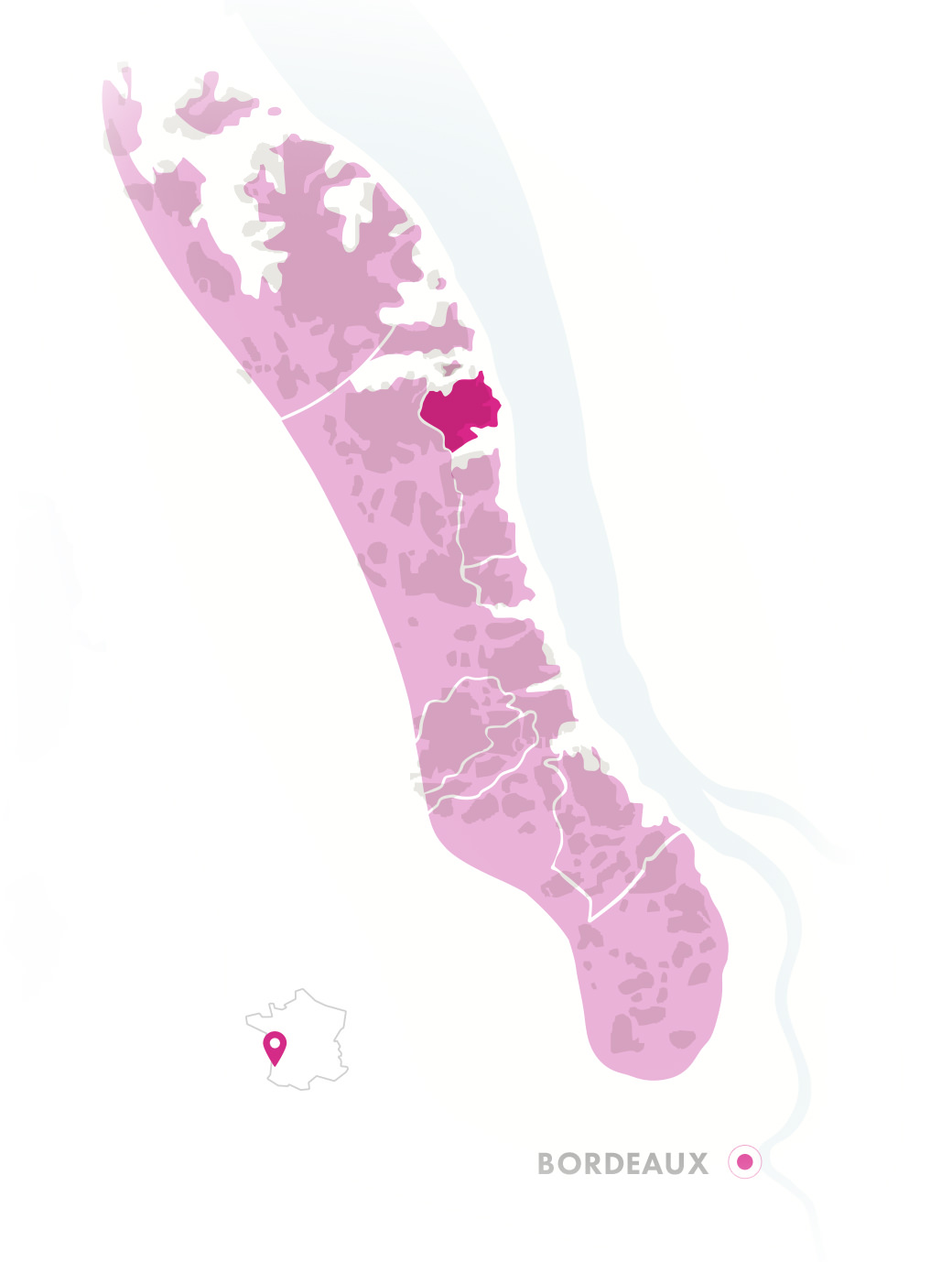
A land of great wines, Saint-Estèphe is situated almost in the centre of the Médoc, close to the Gironde Estuary. The appellation is equidistant from Bordeaux and the Pointe de Grave.
The beds of soil are characterized by their remarkable diversity, the result of their undulating relief and excellent drainage. Quartz and well-rounded pebbles mingled with light, sandy surface soil are found everywhere, giving the wines a distinctive finesse. The subsoil is made up of the famous Saint-Estèphe limestone, which outcrops on the west of the commune.
Tasting
Thanks to ideal conditions of climate and geology, Saint-Estèphe wines are characterized by a complexity and a robust constitution. Accordingly, they can be laid down for a very long time while preserving their youth and freshness.
Distinguished by subsoil with more clay than the other communal appellations, which lie by the river, the wine attains a distinctive individuality: a very rich tannic structure, a fine deep red colour and an exceptional backbone with aromas of great finesse.
Crus